Spider and Boxelder Bug Control in Albany, Oregon
Fall is one of the most active times of year for spider and boxelder bug control in Albany, Oregon. As temperatures begin to cool across the Willamette Valley, homeowners often notice a sudden increase in spider webs around their homes and large numbers of boxelder bugs gathering on exterior walls. These two pests behave very differently, but both can become significantly more noticeable around Albany homes during late summer and fall — and both are worth addressing before winter arrives.
At H3 Pest Control, we start receiving more calls about spiders and boxelder bugs every year as the season changes. Understanding why these pests show up, where they come from, and what actually works to control them can help Albany homeowners get ahead of the problem before it gets worse.
Why Are There More Spiders Around Albany Homes in the Fall?
Spiders are present year-round in Albany and throughout Linn County, but homeowners tend to notice them much more as summer transitions into fall. There are a few reasons for this.
Some spiders become more active during fall while searching for mates, making them more visible around the exterior of homes. Others simply become easier to see because their webs have grown larger over the summer around eaves, windows, porches, garages, and covered areas. The webs that have been there for months are now more noticeable as vegetation thins and lighting changes.
Albany homes provide excellent structure for spiders to build webs. Eaves, window frames, doorways, porch ceilings, garages, sheds, and covered patios all offer protected areas where spiders can establish themselves without much disturbance. Homes in older neighborhoods near downtown Albany, along the Calapooia River corridor, and in areas with mature landscaping tend to see more spider activity because there is more vegetation and shelter nearby.
Exterior lighting is another major contributor to spider activity. Lights attract flying insects at night, and those insects provide a steady food source that keeps spiders active and building webs around entry points and covered areas. If you have noticed large webs forming around porch lights or garage fixtures, that is exactly why.
Effective spider control in Albany goes beyond simply spraying around the perimeter. Removing accessible spider webs and egg sacs is an important part of the service — regularly knocking down webs makes the exterior look better and removes areas spiders have already established, making the treatment more effective overall.
Common Spiders Found Around Albany, Oregon Homes
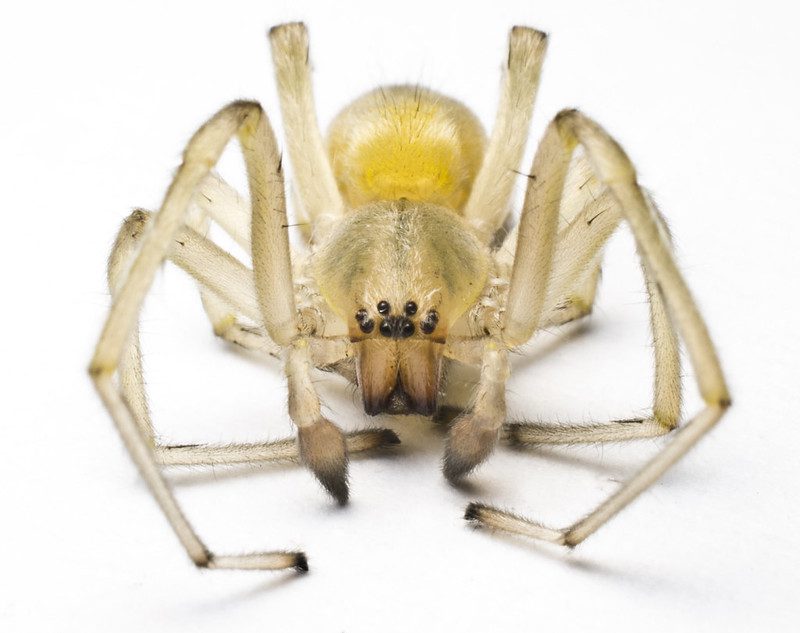
Not all spiders around Albany homes are the same, and knowing what you are dealing with helps determine the right approach.
Hobo Spiders are one of the more commonly encountered spiders in the Willamette Valley. They tend to build funnel-shaped webs in low areas, around foundations, in window wells, garages, and crawl spaces. They are often found at ground level and are fast-moving when disturbed.
House Spiders are the most common spider found inside Albany homes. They are small, brownish, and typically found in corners, behind furniture, under sinks, and in basements. They are more of a nuisance than a threat.
Cellar Spiders — often called daddy longlegs — are common in basements, crawl spaces, garages, and storage areas. They create loose, irregular webs and tend to stay in undisturbed areas.
Orb Weavers are the large spiders that build impressive circular webs around eaves, fences, and landscaping in late summer and fall. They are harmless to people but their webs can become very noticeable around the exterior of homes.
Giant House Spiders are frequently found in Albany homes in the fall and are often confused with hobo spiders. They are large, fast-moving, and commonly seen running across floors or walls as temperatures drop.
Why Boxelder Bugs Gather on Albany Homes
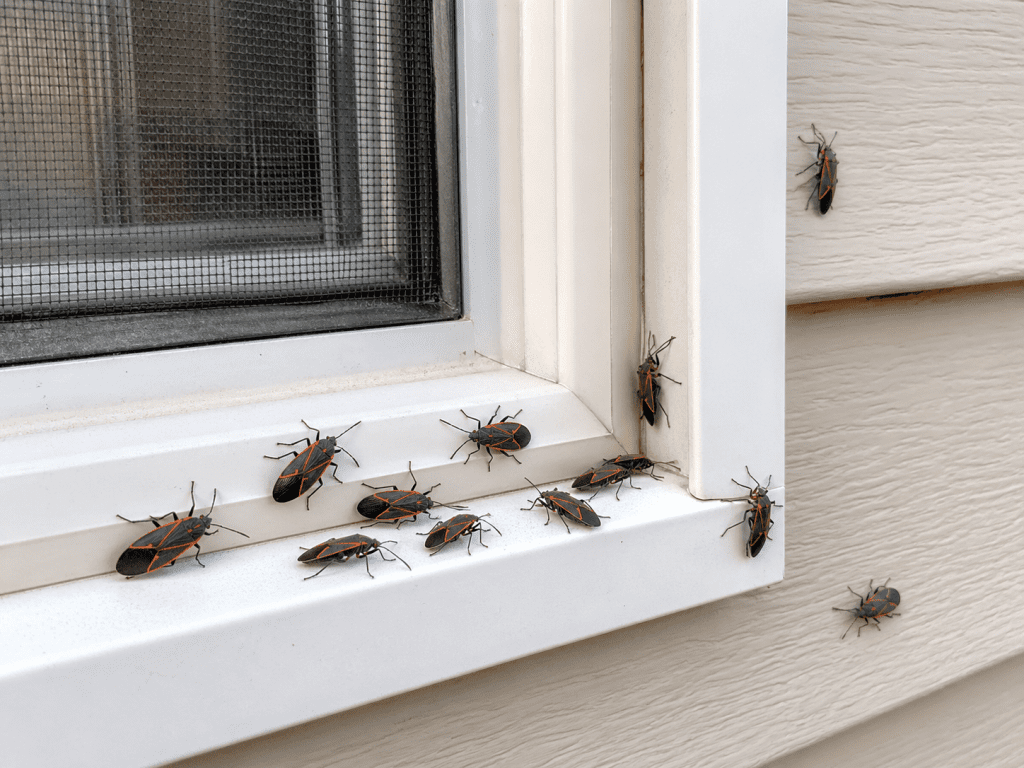
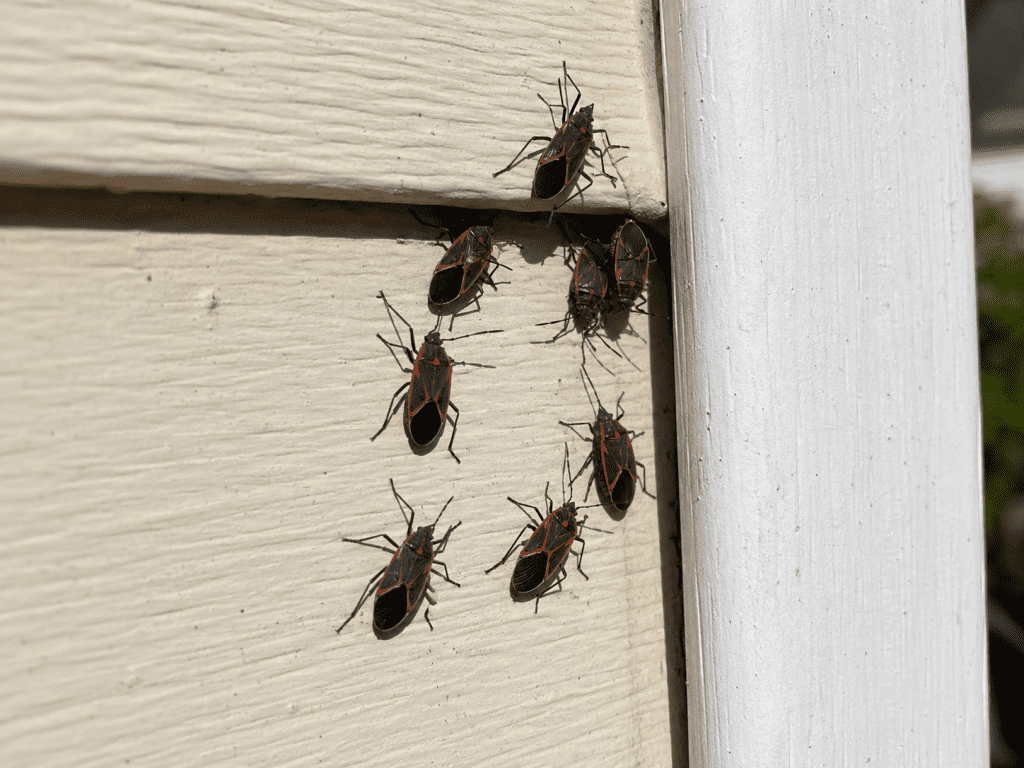
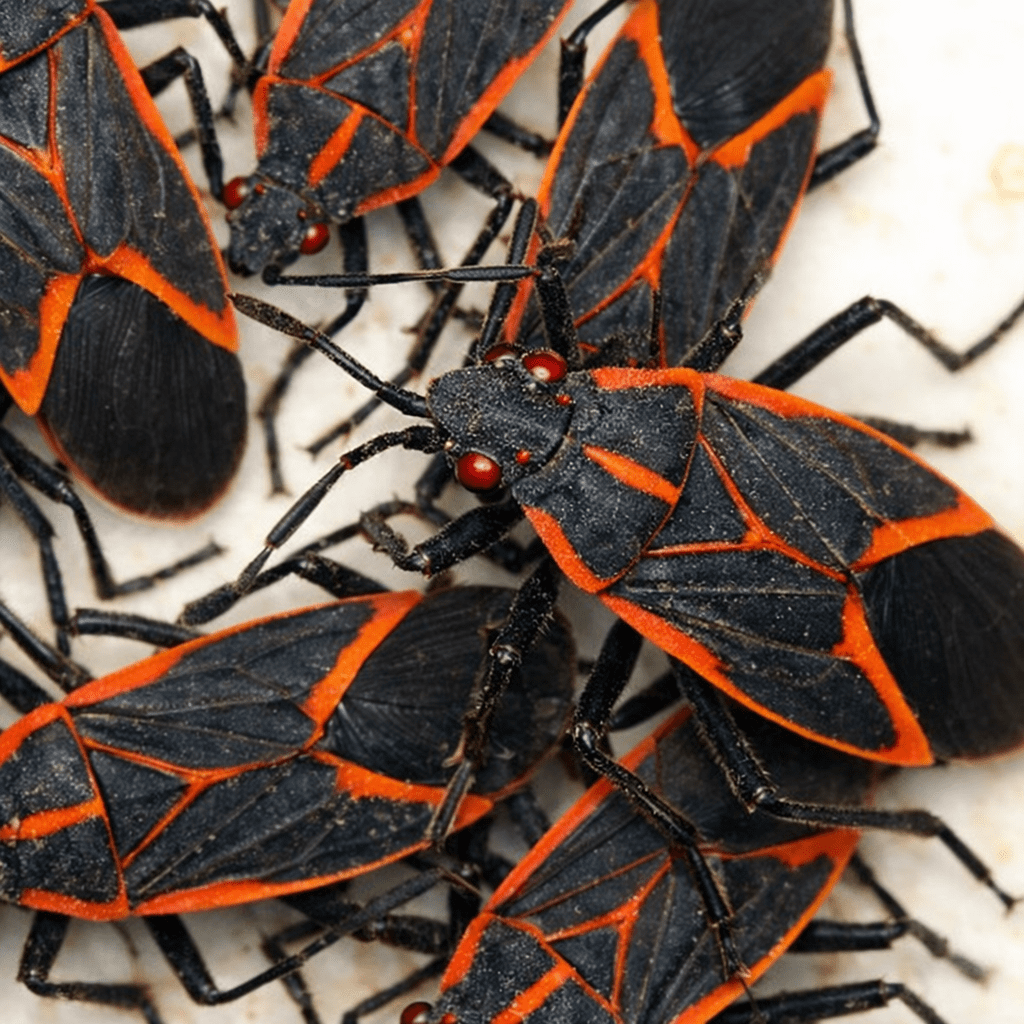
Boxelder bugs are another pest that becomes especially noticeable in Albany as cooler weather arrives. These black and red insects often gather in large numbers on warm, sunny surfaces — particularly south- and west-facing walls that absorb heat from the afternoon sun. If you have ever walked outside on a warm fall day and found hundreds of them clustered on your siding, you already know how quickly they can show up.
During fall, adult boxelder bugs begin searching for protected places to spend the winter. Cracks around siding, windows, doors, fascia boards, vents, and other small openings can give them access to wall voids and other sheltered spaces inside the home. Once inside, they may remain dormant through the winter and become active again on warmer days — sometimes emerging inside the house unexpectedly.
Boxelder bugs primarily feed on boxelder trees, especially seed-producing female trees. They can also feed on other maple species. This means a homeowner can experience significant boxelder bug activity even without a boxelder tree on their own property — the bugs can travel from trees elsewhere in the neighborhood. In Albany, boxelder and maple trees are common in established neighborhoods throughout the city, which is why boxelder bug pressure can vary significantly from one street to the next.
Are Boxelder Bugs Dangerous?
Boxelder bugs are primarily a nuisance pest. They do not cause structural damage to homes and are not considered dangerous to people or pets. However, large numbers of them can become extremely frustrating to deal with, and they can leave behind staining on walls, curtains, window sills, and other surfaces when crushed or disturbed.
If boxelder bugs are already inside the home, smashing them is not the best approach. Vacuuming them up is a cleaner option that avoids staining. The more effective long-term strategy is reducing the number that make it inside in the first place — which means addressing the exterior before they move in for winter.
The Best Time to Control Boxelder Bugs in Albany
Timing is one of the most important factors with boxelder bug control. Once large numbers have already worked their way into wall voids and protected areas of the home, controlling them becomes significantly more difficult. The better approach is to address the activity on the exterior while the bugs are still gathering and before they move into the structure for winter.
Exclusion work is a critical part of this. Sealing gaps around windows, doors, siding, utility penetrations, vents, fascia boards, and other entry points can dramatically reduce the number of boxelder bugs that make it inside. Exterior treatments may also be appropriate when large populations are gathering around the structure.
For Albany homeowners, early to mid-fall is typically the right window to take action. Waiting until you are already seeing them inside means the problem is already further along than it needed to be.
If you are seeing boxelder bugs building up on your home right now, contact H3 Pest Control for a free inspection before they move inside for winter.
Spider and Boxelder Bug Prevention Work Well Together
One practical advantage of addressing these two pests at the same time is that many of the same exterior areas require attention for both. During a general fall pest service, H3 Pest Control inspects and treats common pest harborage and entry areas around the home, knocks down accessible spider webs, cobwebs, and wasp nests, and checks areas that are commonly overlooked.
Key areas that receive attention during a fall exterior service include:
- Eaves, soffits, and rooflines
- Window frames and door frames
- Foundation edges and crawl space vents
- Garage doors and side entries
- Covered patios and porch ceilings
- Fences and retaining walls
- Siding and utility penetrations
- Sheds and outbuildings
This type of exterior service helps reduce spider activity while also addressing seasonal pests like boxelder bugs before they settle in for the winter.
Fall Pest Control in Albany, Oregon
Fall is one of the most important times to pay attention to what is happening around the exterior of your home. Spider webs building up around the eaves and windows, and boxelder bugs suddenly appearing by the hundreds on a sunny wall, are signs that pest activity is changing with the season.
Taking care of these problems before winter gives homeowners the best chance of keeping pests from settling into protected areas of the structure. Albany’s mix of older homes, established neighborhoods, mature landscaping, agricultural edges along the Calapooia River and Willamette River corridors, and seasonal weather patterns all contribute to fall pest activity that is worth getting ahead of.
H3 Pest Control is a family-owned, local pest control company with 18 years of experience serving Albany and the surrounding Willamette Valley. Our owner holds Associate Certified Entomologist (ACE) credentials — one of the highest designations in the pest control industry — which means treatments are based on a real understanding of pest biology and behavior, not guesswork.
We also provide:
- General pest control in Albany
- Ant control
- Rodent control
- Wasp and yellow jacket control
- Bed bug treatment
Visit our Pest Library to learn more about common pests found throughout Albany and the Willamette Valley.
Frequently Asked Questions About Spider and Boxelder Bug Control in Albany, Oregon
Why are there suddenly so many spiders around my Albany home in the fall?
Fall spider activity increases for a few reasons. Some species become more active while searching for mates. Webs that have been building up over the summer become more visible as vegetation thins. And spiders that have been living outside begin looking for sheltered entry points as temperatures drop. Exterior lighting that attracts insects also keeps spiders active and well-fed around homes.
Are the spiders around my Albany home dangerous?
Most spiders found around Albany homes are harmless and more of a nuisance than a threat. Hobo spiders are commonly encountered and can deliver a bite if handled, but serious reactions are uncommon. If you are unsure what type of spider you are dealing with, it is worth having someone take a look rather than guessing.
Why are boxelder bugs only on one side of my house?
Boxelder bugs are attracted to warm surfaces. South- and west-facing walls absorb more afternoon sun heat, which is why populations often cluster on those specific sides of a home. This behavior is most noticeable on sunny fall days when the temperature difference between sides of the house is significant.
Do boxelder bugs cause damage to my home?
Boxelder bugs do not cause structural damage to homes. However, they can leave staining on walls, curtains, and interior surfaces when crushed. Large numbers inside the home can become a significant nuisance, especially if they become active on warm winter days.
How do I stop boxelder bugs from getting inside?
The most effective approach is a combination of sealing entry points and exterior treatment before populations move inside for winter. Gaps around windows, doors, siding, fascia boards, utility penetrations, and vents are common entry points. Addressing these in early to mid-fall gives the best results.
Can you treat for both spiders and boxelder bugs at the same time?
Yes. Many of the same exterior areas need attention for both pests, so a fall exterior service can address spider webs, harborage areas, and boxelder bug activity in a single visit. H3 Pest Control offers free inspections so we can assess what is actually happening around your specific property before recommending a service.
When is the best time to call about boxelder bugs in Albany?
The best time to call is when you first start noticing them gathering on the exterior of your home — before large numbers have had a chance to move inside wall voids and sheltered areas for winter. Once they are inside, control becomes more difficult. Early to mid-fall is typically the right window in the Albany area.
Schedule Spider and Boxelder Bug Control in Albany, Oregon
If you are dealing with spiders, boxelder bugs, or other fall pests around your Albany home, H3 Pest Control offers free inspections and honest recommendations — no pressure, no upsells.
Contact H3 Pest Control today to schedule pest control service in Albany, Oregon.