


Contact Us
Mice Control in Oregon
Mouse Problems in Your Home, Garage, or Crawl Space?
Mice are one of the most common pest problems around Oregon homes. They can get into wall voids, attics, garages, crawl spaces, sheds, and storage areas through surprisingly small openings. Once inside, they contaminate areas with urine and droppings, damage stored items, and can create real health and sanitation concerns. Oregon State University identifies the common house mouse as a small, non-native rodent that commonly lives in homes and structures.
A mouse problem is not just about the occasional sighting. In many cases, what homeowners notice first is scratching in the walls, droppings under sinks or in pantries, chewed food packaging, or activity in garages and utility spaces. By the time those signs show up, mice may already be well established.
House Mice vs. Deer Mice
Not every mouse around a property is the same, and this matters more than many people realize. In Oregon, two mice people commonly hear about are the house mouse and the deer mouse.
House Mice
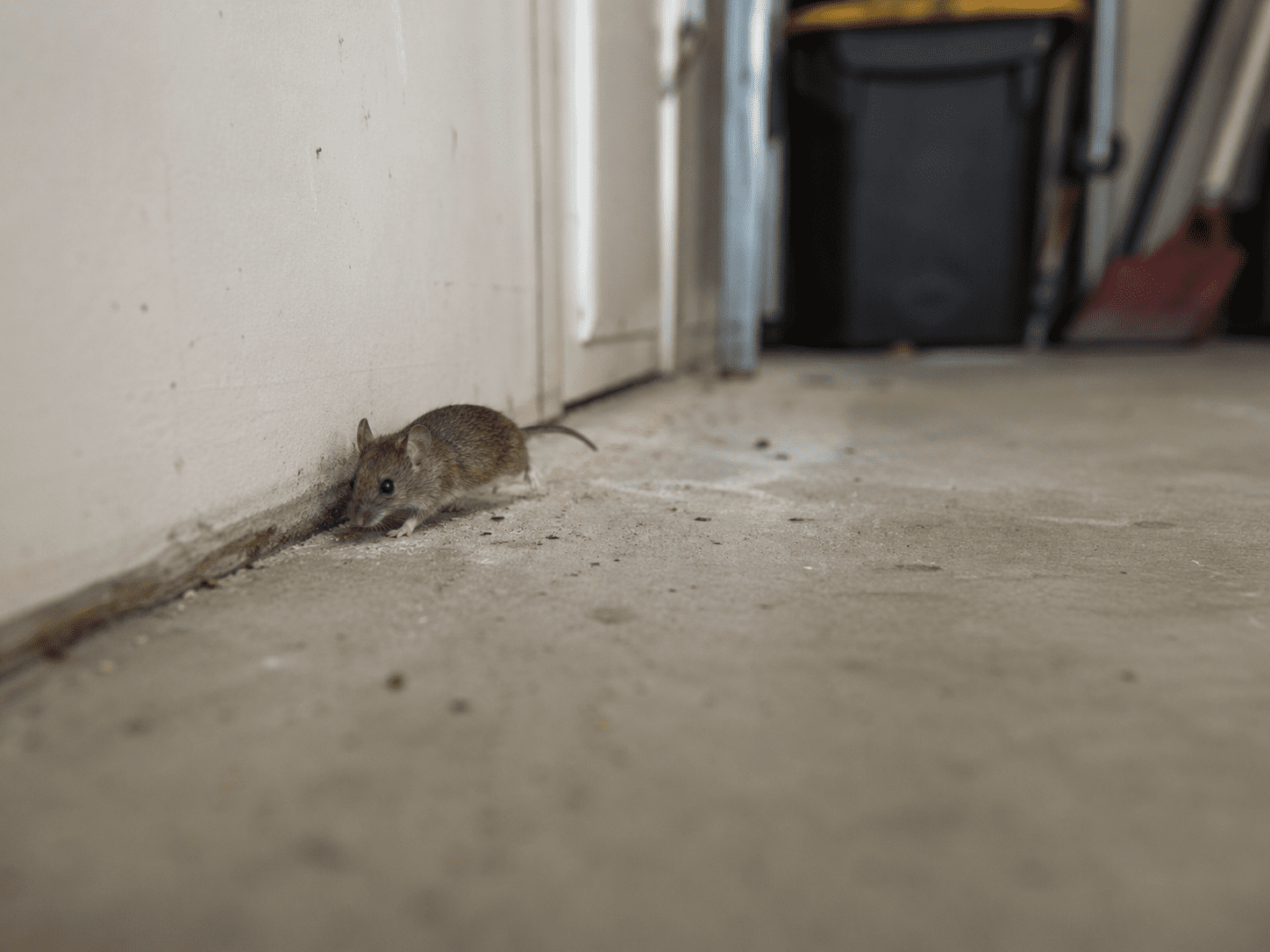
The house mouse (Mus musculus) is the classic structure-invading mouse. Oregon State University describes it as a small, non-native rodent found in homes and other structures, where it uses spaces in walls and openings around pipes to move inside.
House mice are usually more compact in shape and are common in living spaces, garages, utility areas, and food-storage areas. They are the mouse most homeowners are talking about when they mention a recurring mouse infestation inside the structure.
Deer Mice
The deer mouse looks different from a house mouse and often shows up in more rural, wooded, or outbuilding-type settings. Oregon State University notes that deer mice have white feet, a white underbelly, and white underneath a softly hairy tail, while house mice do not have that clean white coloration and tend to have a shorter, hairless tail, smaller ears, and a chunkier body. OSU also notes that deer mice are very common in forests and areas with mixed shrubs, trees, and grass.
That difference matters because deer mice are the mouse homeowners especially need to think about around sheds, barns, cabins, garages, and other lightly used spaces near vegetation or rural habitat. CDC notes that hantavirus cases in the U.S. usually occur in rural settings and that rodents can get into homes and barns, where they leave urine or feces behind.
Why Mice Are More Than Just a Nuisance
Mice are destructive, but they are also a sanitation and health concern. CDC warns that many diseases do not cause obvious illness in rodents, which means you cannot tell whether a mouse is carrying disease just by looking at it. CDC also notes that rodent infestations in and around the home are the main reason disease spreads from rodents to people.
Mice can create problems such as:
- contaminating food and surfaces with urine and droppings
- damaging insulation, boxes, and stored belongings
- chewing wiring and other materials
- nesting in wall voids, attics, and storage areas
- increasing health concerns during cleanup or heavy infestations
Hantavirus and Deer Mice
One of the biggest health concerns tied to mice is hantavirus. CDC states that people can get hantavirus from contact with infected rodents, especially exposure to their urine, droppings, and saliva. In the U.S., the most common hantavirus that causes hantavirus pulmonary syndrome (HPS) is spread by the deer mouse. CDC also explains that hantaviruses in the Western Hemisphere can cause HPS, a serious illness that affects the lungs.
CDC further notes that people can be infected when contaminated materials are stirred up and the virus gets into the air, or when rodent saliva, urine, or feces get into a person’s eyes, nose, mouth, or cuts in the skin. That is a major reason why deer mouse activity in barns, sheds, crawl spaces, garages, cabins, and other less-disturbed areas should be taken seriously.
Other Pathogens and Health Concerns Mice Can Bring
Hantavirus is not the only concern. CDC states that lymphocytic choriomeningitis, or LCM, is a viral disease spread by the common house mouse. CDC also notes that LCM can cause serious illness in people with weakened immune systems and in pregnant women.
In addition, CDC says rodents can carry ticks, mites, or fleas that can spread disease, and that flea exposure can be a concern when handling dead rodents or nesting materials. This is another reason mouse problems should be handled carefully and thoroughly, especially when an infestation has been active for a while.
Common Signs of a Mouse Infestation
Many mouse problems are discovered by signs rather than by actually seeing the mice.
You may have mice if you are noticing:
- droppings under sinks, in drawers, or in pantries
- scratching sounds in walls or ceilings
- gnaw marks on food packages, boxes, or wires
- nesting material made from paper, insulation, or fabric
- a strong stale or musky odor in enclosed areas
- activity in garages, sheds, crawl spaces, or attic spaces
The more signs you are seeing, the more likely it is that the infestation is established and not just a one-time mouse wandering through.
Where Mice Commonly Get In
Mice can enter through very small gaps, especially around older construction or utility penetrations. House mice often move through gaps around pipes, wall voids, and structural openings. Once they are inside, they tend to stay close to shelter, food, and nesting material.
Common entry points include:
- gaps around utility lines and pipes
- garage door corners and weather stripping
- crawl space and foundation openings
- attic vents and roofline gaps
- door thresholds and poorly sealed side doors
- openings around sheds and outbuildings
Our Mouse Control Approach
Good mouse control is not just about setting a few traps. It works best when it combines inspection, population reduction, sanitation awareness, and exclusion.
A typical mouse service may include:
Inspection
We identify where mice are active, what type of mouse pressure is present, and which areas of the structure are allowing activity to continue.
Targeted Control
Control is focused on high-activity zones instead of random placement. This may include trapping and other professional control methods based on where mice are nesting and traveling.
Exclusion Recommendations
CDC emphasizes sealing up holes around the home as a key step in preventing rodent infestations. Long-term control usually depends on closing the gaps that let mice keep coming back.
Sanitation and Cleanup Guidance
Food access, clutter, and nesting harborage can all make a mouse problem harder to solve. Reducing food, water, and shelter is one of CDC’s main recommendations for preventing rodent infestation.
Safe Cleanup Matters
One of the most important things homeowners should know is that mouse droppings should not be vacuumed or swept dry. CDC specifically warns not to vacuum or sweep rodent urine, droppings, or nesting material because that can put contaminated particles into the air. Instead, CDC recommends wearing gloves, soaking the material with disinfectant or bleach solution, letting it sit, and then wiping it up with paper towels. For homes, sheds, barns, and similar spaces, CDC also recommends opening doors and windows for 30 minutes before cleaning to ventilate the area.
This is especially important when dealing with deer mice or rodent activity in outbuildings, crawl spaces, garages, and other enclosed spaces that may have had long-term infestation.
How to Help Prevent Mice
There are several practical steps that help reduce mouse pressure around the home:
- seal gaps and openings around the structure
- store food and pet food in sealed containers
- reduce clutter in garages, sheds, and storage areas
- clean up droppings safely and promptly
- keep vegetation and debris from building up against the structure
- monitor lightly used buildings and outbuildings for early signs of activity
Schedule Mouse Control Service
If you are seeing droppings, hearing scratching, or finding signs of mouse activity in your home, garage, attic, or shed, it is best to take care of it early. Mouse problems rarely improve on their own, and the health concerns are one more reason not to let the issue continue.
Our mouse control service is designed to identify the problem, reduce active infestations, and help keep mice from returning.