Contact Us
Wasp and Yellowjacket Pest Control in Oregon
Wasp and Yellowjacket Control for Oregon Homes
Wasp and yellowjacket control is important when stinging insects start taking over your yard, patio, entryway, or play area. In Oregon, homeowners often deal with yellowjackets, paper wasps, and sometimes bald-faced hornets or aerial yellowjackets, and there are several species of stinging insects homeowners may encounter. Once nests get established, these pests can make outdoor spaces stressful and difficult to use.
When you see frequent wasp traffic, insects flying in and out of one opening, or nests attached to the structure, it is time to act. Early wasp and yellowjacket control helps reduce stings because yellowjackets can sting multiple times, which matters even more for people with known allergies, lowers risk around the home, and keeps a small problem from turning into a much larger one.
Why Wasp and Yellowjacket Control Matters
A single wasp flying by usually is not the real problem. The real problem starts when a nest is active near a doorway, deck, garbage area, walkway, or play space. At that point, yellowjackets and other wasps can become aggressive and defend the nest quickly, and while most people have pain and swelling after being stung, severe reactions need urgent care.
Because of that, wasp and yellowjacket control is about more than convenience. It helps protect kids, pets, guests, and anyone spending time outside, since stings can cause allergic reactions and may be life threatening for people with allergies. It also helps prevent nests from growing larger as the season goes on.
Wasp and Yellowjacket Control and Common Oregon Species
Homeowners often call everything a wasp, but the type matters. Oregon homes may be visited by several species, and different species nest in different places, behave differently, and often need a slightly different treatment plan.
Yellowjackets
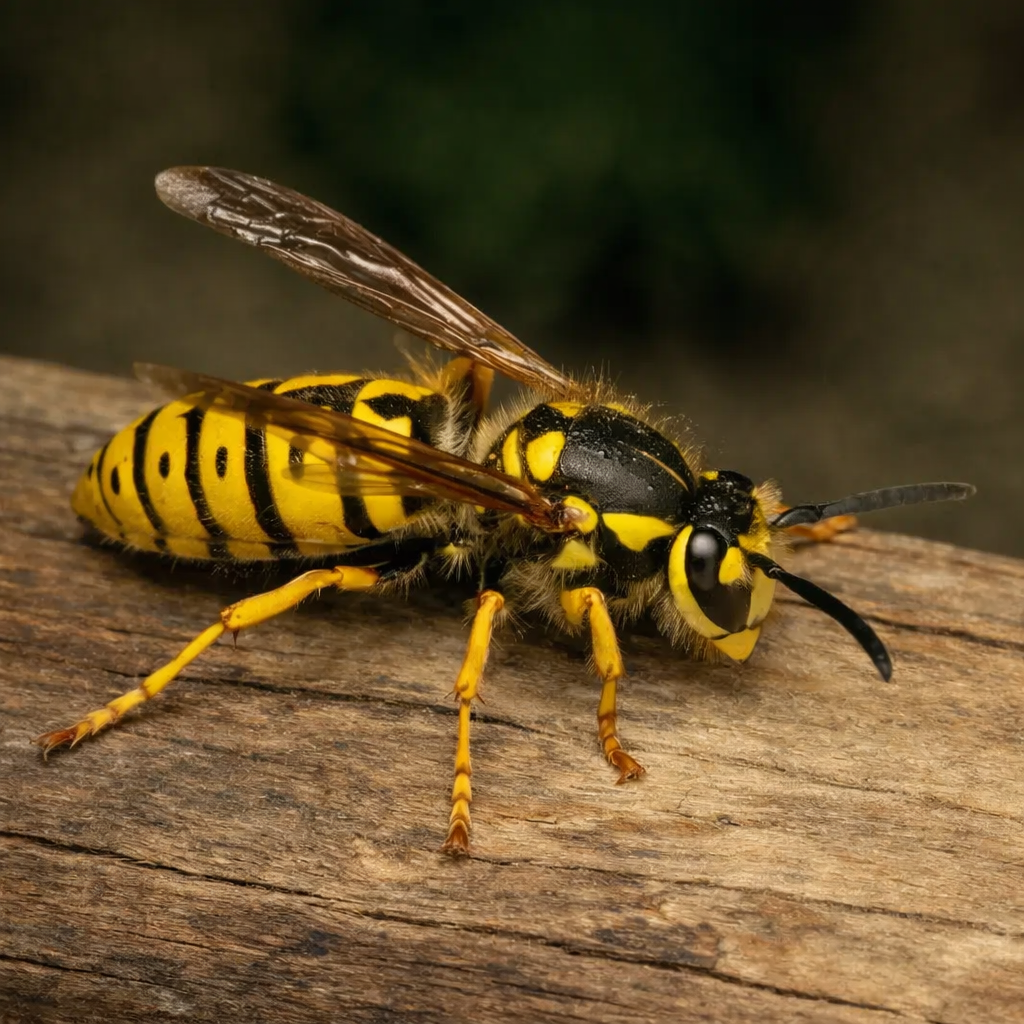
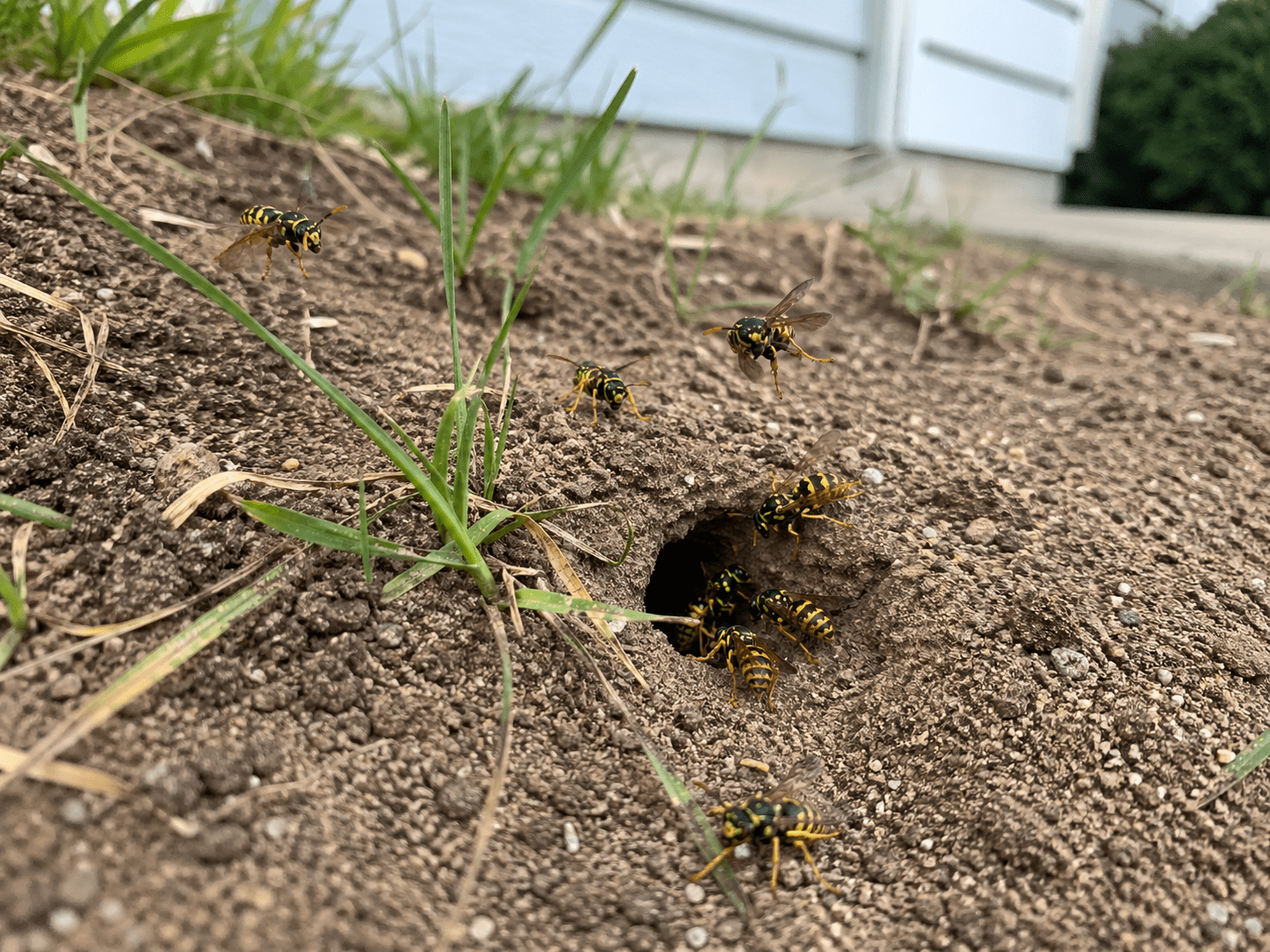
Yellowjackets are one of the most common stinging insect problems around Oregon homes, and yellow jackets in Oregon commonly use ground nests, wall voids, and structural openings. As the colony expands with developing larvae inside the nest, activity around the site increases. They also tend to be more defensive than many other wasps, especially in late summer and fall. At that point, worker yellow jackets often become more noticeable around food sources.
Paper Wasps
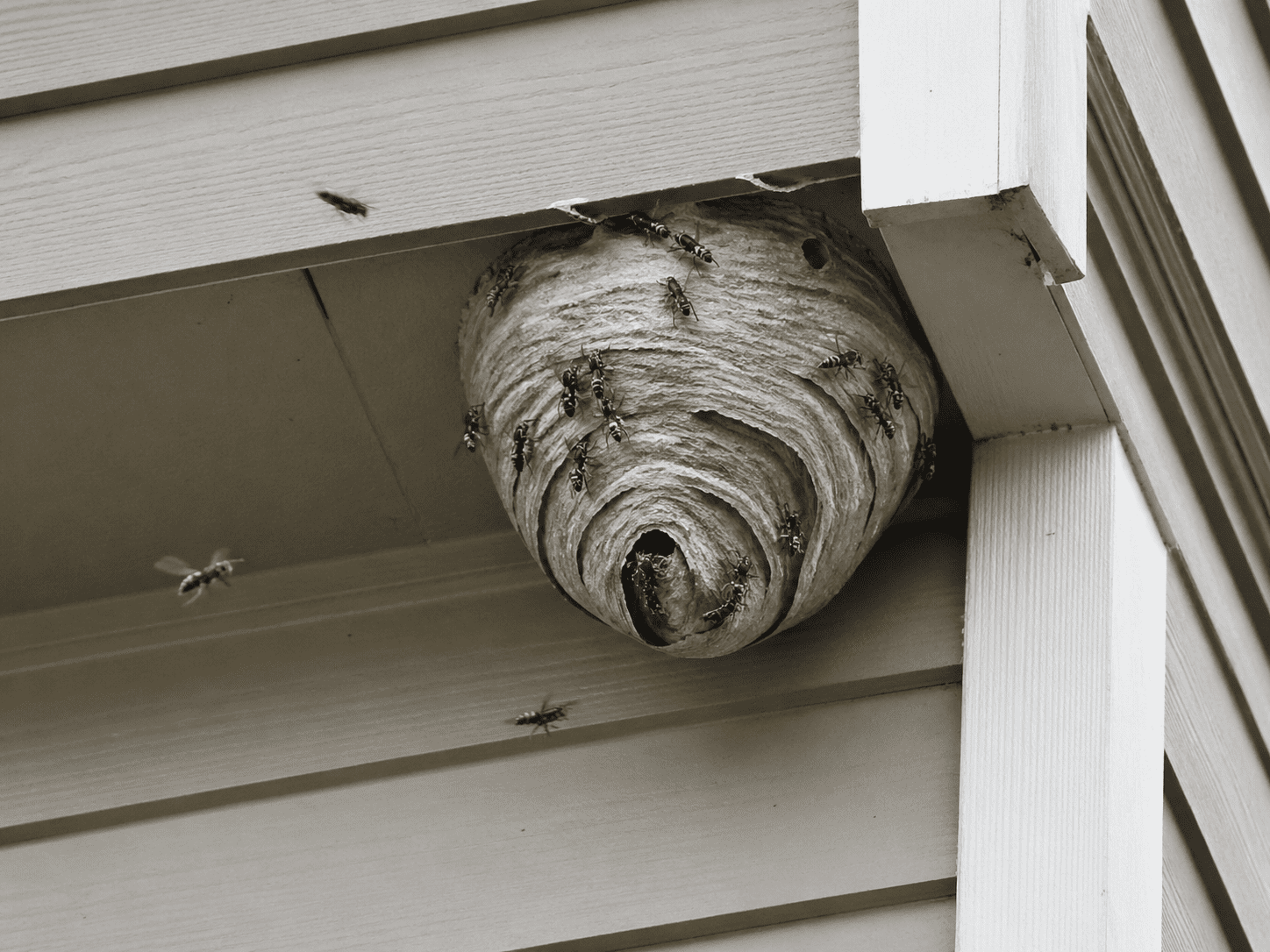
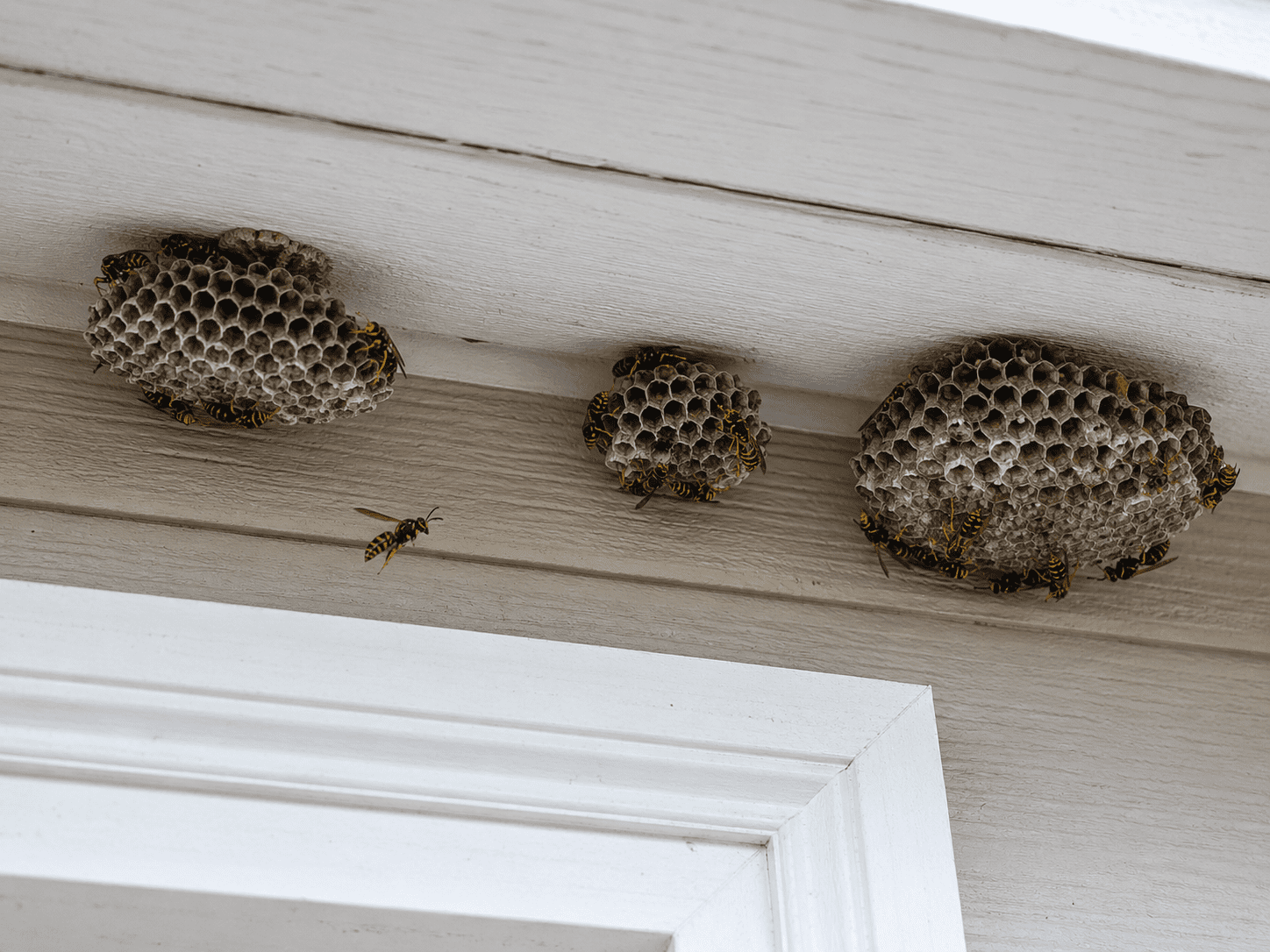
Paper wasps usually build open, umbrella-shaped nests or hives in sheltered areas such as eaves and overhangs. For example, they often nest under eaves, overhangs, porch ceilings, and covered exterior corners. Each spring, only the queen starts new nests. Although they are often less aggressive than yellowjackets, they still sting when someone disturbs the nest.
Bald-Faced Hornets and Aerial Yellowjackets
Bald-faced hornets and aerial yellowjackets, including the aerial yellowjacket (Dolichovespula arenaria), usually build above-ground paper nests that are hanging from eaves, shrubs, or tree branches. These nests can become large, and the insects often defend them aggressively.
Where Wasp and Yellowjacket Control Usually Starts
The first step in good wasp and yellowjacket control is finding the actual source of activity. In many cases, homeowners notice the flying insects first, but the nest location tells the real story.
Common nesting areas include:
- ground holes and old rodent burrows
- wall voids and structural gaps
- eaves and overhangs
- porch ceilings
- sheds and outbuildings
- deck covers
- trees and shrubs
- garage edges and rooflines
- protected areas around the home, such as sheltered structural spots
If you keep seeing insects fly to one exact spot, there is a good chance active nest sites are nearby.
Yellowjackets vs. Paper Wasps
Yellowjackets and paper wasps create different kinds of problems. Yellowjackets usually stay more compact in shape, act more aggressively, and become a bigger nuisance around food, trash, outdoor gathering areas, and outdoor seating areas. Paper wasps, on the other hand, have a slimmer shape and often stay around exposed nests attached to the structure.
That difference matters because a visible paper wasp nest under an eave calls for a different response than yellowjackets disappearing into a hole near the lawn or foundation.
When Wasp and Yellowjacket Control Becomes Most Important
Wasp activity usually builds as the weather warms up. Then, as summer continues and the colony expands, outdoor spaces can become harder to tolerate around the home. Later in the season, yellowjackets often become even more defensive, which is why many people call once yards and patios suddenly feel unusable.
In general, early morning is the safest time for any professional nest treatment because activity is lower then.
For that reason, earlier wasp and yellowjacket control usually works better than waiting until nest activity gets heavy.
Our Wasp and Yellowjacket Control Process
We focus on active nests, problem areas, and the conditions that allow stinging insects to stay around the property, while recognizing that some wasps can be beneficial because they help reduce insect pests nearby.
Treatment decisions should also consider people, pets, pollinators like bees, and the surrounding environment.
Inspect Active Areas
First, we identify where activity is happening and what kind of nesting site is involved. That helps us determine whether the issue is in the ground, in a void, attached to the home, or located in a nearby tree or shrub, and distinguish yellowjackets from other wasps and other insects based on nest location and activity patterns.
Treat the Nest Source
Next, we target the source of the activity, because removing or treating active wasp nests requires extreme caution. Instead of trying to rid the area by chasing random flying insects, professionals use protective gear when needed and focus on the nest or the primary activity point. That approach gives much better results and helps reduce ongoing pressure around the property. In some situations, traps or other methods may help, but the main goal is treating the actual nest source.
Reduce Conditions That Attract Wasps
In addition, we can point out attractants that make the property more attractive to wasps and yellowjackets, and note that homemade traps may reduce foraging activity away from key use areas, though they do not replace nest treatment. Food sources, open trash, pet food, and accessible nesting spots can all increase activity.
How to Help Prevent Future Wasp and Yellowjacket Control Problems
No property is completely immune to wasps, but a few steps can lower the chances of a major issue.
Helpful prevention steps include:
- keep garbage lids closed tightly
- clean up sugary spills and outdoor food quickly, especially in outdoor seating areas
- avoid leaving pet food outside
- watch for insect traffic near ground holes and gaps, and check for nearby ground nests before yard use
- inspect eaves, patio covers, sheds, under eaves, along rooflines, and in tree branches for new wasp nests before they grow
- seal openings that allow nesting in or under the structure
Most importantly, deal with new nest activity early. Small nests are usually much easier to handle than mature colonies.
Schedule Wasp and Yellowjacket Control in Oregon
If yellowjackets are taking over your yard or paper wasps are nesting on your home, now is the time to deal with it. Fast wasp and yellowjacket control can help restore safe use of your outdoor spaces and reduce yellowjacket stings around your outdoor spaces.